Tashkent (UNA/Bernama) – Malaysia called on the Islamic world to respond to the humanitarian tragedy in Gaza by reaffirming universal humanitarian principles based on justice, compassion and human dignity.
The Minister in the Prime Minister's Office (Religious Affairs), Dr. Zulkifli Hassan, said that the suffering endured by civilians in Gaza not only shakes the human conscience, but also raises serious questions about the consistent application of international law and the achievement of justice.
He added that this tragedy also revealed the urgent need to renew Islamic civilization so that it can contribute effectively to achieving world peace and moral leadership.
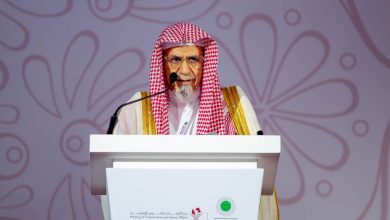
Zulkifli’s remarks came during his speech at the plenary session of the International Islamic Civilization Forum currently being held in the Uzbek capital, Tashkent.
Suad al-Wazir explained that the Islamic world should not define itself solely through reactions to external developments, but should derive its strength from the fundamental principles of Islamic civilization that still retain their importance, namely: knowledge, justice, mercy, moderation, and wisdom.
He pointed out that Islamic civilization is required today to move beyond nostalgia for past glories and focus on contributing to shaping the future of humanity in light of the rapid transformations in geopolitical, technological and environmental aspects.
He said: The question before us is no longer whether Islamic civilization reached the peak of its glory in the past, for history has already answered that.
But the most pressing question today is: What role should Islamic civilization play in shaping the future of humanity?
He added that the world today is not only looking for technological progress and economic prosperity, but also for moral clarity, values-based leadership, and firm principles, all of which are things that Islamic civilization is still able to offer.
Zulkifli stressed that the true renewal of civilization begins with the renewal of thought, the consolidation of trust, and the strengthening of collective responsibility, and not with reliance on material power alone.
He explained that the desired renaissance of the Islamic world must restore morality to the system of governance, wisdom to knowledge, and purpose to the development process, while preserving the spiritual dimension and scientific progress at the same time.
He called for practical steps to be taken, stressing that the revival of Islamic civilization must start from stronger institutions, high-quality education, and ethical leadership.
He added that principles such as justice, honesty, consultation, and accountability will continue to form the essential pillars of good governance in an increasingly complex world.
Regarding emerging technologies, he said that Islamic societies should be active partners in setting ethical frameworks for artificial intelligence, biotechnology, and quantum computing, ensuring that innovations remain in the service of humanity and preserve human dignity.
He also called for greater environmental responsibility, noting that the Islamic concept of humankind as God's vicegerent on Earth necessitates balanced, responsible, and sustainable development. He pointed out that the strength of Islamic civilization throughout history has been manifested in its openness, as its scholars drew upon the knowledge of Greece, Persia, India, and China while preserving Islamic values.
The minister stressed that the revival of Islamic civilization should not be understood as a competition between civilizations, but rather as an opportunity to contribute to serving humanity through dialogue, cooperation and mutual respect.
Regarding bilateral relations, Zulkifli said that Malaysia and Uzbekistan share a common cultural heritage, with Uzbekistan’s Islamic scientific heritage complementing Malaysia’s experience in Islamic governance, Islamic finance, and peaceful coexistence in multicultural societies.
He added that the two countries are capable of forming a bridge between Central Asia and Southeast Asia in promoting knowledge, innovation, and sustainable development, which will benefit the entire Islamic world.
He affirmed that Malaysia will remain committed to strengthening cooperation among Islamic countries, while continuing to build constructive relationships with partners from different civilizations to address common global challenges.
He said: “The greatness of Islamic civilization has never been measured solely by the splendor of its architecture or the greatness of its scientific discoveries. Its true greatness lies in its ability to build a just society, prepare moral leaders, preserve the dignity of every human being, and consider the pursuit of knowledge as a form of servitude to God and service to humanity.”
(is over)